Category: Ingredients

  • Grass-Fed Meat

    Grass-Fed Meat

    Grass-fed beef has become increasingly more popular, and not without reason. Cows are meant to eat a certain way, and surprise!, that way is not trapped in cages and force-fed an unnatural diet. Red meat has gotten a bad wrap for wreaking havoc on our systems over the last couple of decades, but when we take a closer look at the reality of where the majority of our meat comes from, it is no wonder this poor substitute has been damaging our bodies. We have been eating sick, tortured animals, and if “we are what we eat,” logically our bodies have responded in a similar manner. It is no secret these days that many, many, animals are bred, born and raised in captivity to keep them “fat and juicy,” fed a cheap, unnatural diet to keep investments low and profits high, and subjected to stressful, often torturous environments until they are slaughtered for our consumption. Animals were never meant to live like this, and their bodies have become a toxic environment. Unfortunately for us, our bodies then absorb their toxic meat, and the cycle perpetuates.

    Grass-fed meat is a more conscious choice of meat for many reasons. First, the animal has been raised in a more natural environment, allowed to roam the pastures and eat a natural diet, getting exercise and sunshine in the process. Second, because the animal is allowed to thrive and its body is able to grow healthily, naturally, and with low-stress, their nutritious elements are restored. When you eat grass-fed beef, you are getting nutrition benefits that do not come from “conventional” beef. These benefits, according to Jo Robinson in her article about grass-fed meat, include but are not limited to: vitamin E, beta-carotene, vitamin C, and a number of health-promoting fats, including omega-3 fatty acids and “conjugated linoleic acid,” or CLA. You can read much more about the health benefits of grass-fed meats in another one of Jo’s articles here, and I highly suggest that you do so. You will not want to go back to “feedlot” meat afterward.

    Beyond moral and nutrition issues, there is also an environmental factor that goes into conventional vs grass-fed beef. Grass-fed meat is much more environmentally sound, as the manure is not concentrated in one area. Concentrated manure can lead to water pollution and a host of other issues. You can read more about the environmental factors here.

    I urge you to explore the differences between conventional feedlot meat and grass-fed meat, and make a more conscious decision next time you stop by the meat counter. While grass-fed meat is typically more expensive, remember that you are paying for quality, and when it comes to food and the health of your body, quality is crucial.

    Image Source: alderspring.com
  • Watermelon Seeds

    Watermelon Seeds

    I have a new favorite discovery, and they go by the name of Watermelon Seeds. Raw, sprouted watermelon seeds in fact. (You can find more in-depth information on raw foods and sprouted seeds on my Raw, Unfiltered Honey, and Sunbutter posts) They are absolutely addictive. We found them in our local Fresh Market one day, decided to give it a try, and haven’t looked back since. They vaguely remind us of oyster crackers, interestingly enough, because they are light, crunchy, and the Go Raw brand (the only kind I’ve actually ever found so far) are slightly salty. My favorite on the go snack (usually before a workout) is a handful of these guys, a banana, and a few chocolate chips. That classic salty-sweet combo is enough to make that snack into an unbreakable habit. I’ve also recently created a Watermelon Seed “Hummus” which is an amazing mid-day snack to pair with veggies. Why are they so great you ask? Well, if the taste wasn’t enough, let me talk about the PROTEIN. Oh watermelon seeds, oh watermelon seeds, how lovely are your proteeeeins! Eleven grams of protein in 1 ounce. Let me go over that again. ELEVEN GRAMS of protein in TWO TABLESPOONS. In case you were wondering, that’s about 1 shot glass full of seeds. Which is pretty much nothing in the world of snacking. So you could easily get in 2 servings and be at 22 grams of protein, just from these seeds. WHICH, my friends, is why I deemed my Watermelon Seed Hummus as a wonderful afternoon snack to pair with veggies. Easy protein, easy satisfaction. Oh and another benefit: Iron. In the same 1 ounce, or 2 Tbsp, you get 15% of your daily value for iron. Again, you could easily double this. Now granted, out bodies don’t absorb iron from plants quite as well as they absorb iron from animal protein, but hey, every little bit counts. If you’re looking for a new edition to your pantry, I wholeheartedly suggested seeking out these little nuggets of greatness.

  • Coconut Flour

    Coconut Flour

    Coconut Flour

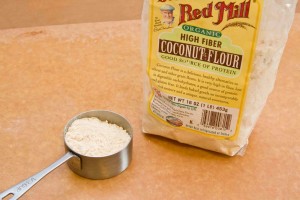
    Coconut flour is becoming a popular “alternative” flour in the world of gluten-free/grain-free baking. I use it often, but it took me a while to figure it out. My very first grain-free baking experience went horribly wrong when I incorrectly assumed you could sub coconut flour for almond flour in a 1:1 ratio. Nope. Can’t do that. Those poor cookies never stood a chance, and were promptly tossed in the trash due to their crumbly, dry nature. It was as if I had just eaten a spoonful of flour straight from the bag. Not exactly pleasant. So I next decided to actually follow a recipe that had coconut flour in it, in the proper ratios, and voila! It has been a staple in my kitchen ever since.

    But what exactly is coconut flour? It’s essentially the byproduct of creating coconut milk. When the milk is squeezed from the flesh of a coconut, the meat can then be dehydrated and ground into a flour. Because of this, coconut flour is nutrient rich: Fiber galore, plus protein, a little fat, and minimal net carbs.

    When buying coconut flour, look for the organic, cream colored kind. You definitely do not want to get any that has been bleached. I always stick to Bob’s Red Mill.

    Be warned, however. As I mentioned above, coconut flour can be rather tricky to work with. It most certainly does NOT work as a 1:1 ratio substitute for other flours. Coconut flour is highly absorbent, which means not only is it typically used in small amounts, but it also requires additional moisture (usually in the form of eggs). I’ve read that in most recipes, you need at least 1 egg for ¼ cup of coconut flour. Therefore, my suggestion is if you are going to experiment with a recipe using coconut flour, do your research on what the typical liquid to flour ratio looks like, and also consider including an additional flour such as almond meal (or sunflower meal, or sunbutter as I often do). Good luck!

    Sources:

    Nourishedkitchen.com

    Marksdailyapple.com

    Products Featured In This Post:

  • Raw, Unfiltered Honey

    Raw, Unfiltered Honey

    Raw, Unfiltered Honey

    In the cooking world, “raw” typically refers to a state of food in which the item has not been heated to a high enough heat to destroy the food’s natural nutritional elements. Usually this means not past 105-118 degrees F. Raw, unfiltered honey is alkaline-forming, which is important for a healthy system. Eating foods in the raw state allows for the preservation of the food’s natural vitamins and enzymes. When you buy processed, commercial honey, all of the wonderful, natural health benefits of honey are lost. Raw honey’s health benefits include antibacterial properties, antioxidants, and digestion and immunity aide. Studies have shown that raw honey has strong antibacterial/antimicrobial properties that help remove bacteria from a topical injury, which helps fight infection and starts the healing process. Raw honey is also anti-inflammatory, and contains properties that regulate the digestive system and can even fight cancer. By eating raw honey that is locally made, you can potentially reduce seasonal allergy symptoms by exposing yourself to small amounts of the pollen growing in your area (similar to the way allergy shots work). For all of these reasons, raw honey is an excellent substitute for the typical white sugar we often use in our recipes. Of course, once baked in a recipe the honey is no longer raw, but even so it is a wonderful alternative to our “typical” sugars, and even to the common, filtered honey that we see in the little squeezy bears. Enjoy!

    For an in-depth look at how raw honey is made at local farms, check out this video!

    Source: http://healthyeating.sfgate.com/benefits-raw-organic-honey-9105.html

    Products Featured In This Post:

  • Sunbutter

    sunbutter

    Sunbutter is made by simply grinding up sunflower seeds and creating a paste. Sometimes other oils or sugars are added, but you could in fact make your own sunbutter with only sunflower seeds and a little added oil (I use avocado oil and Go Raw Sprouted Sunflower Seeds). Of course, you can also buy your sunbutter already made for you. My suggestion, if you choose the store-bought route, would be to check the ingredient label and try to find a brand that uses organic sunflower seeds and does not add any sugar. If there is added oil, avoid vegetable, canola, or soybean oil.

    Since sunbutter is directly made from sunflower seeds, I am just going to address the benefits of the seeds themselves. Why are these non-nutty babies so great? Well friends, let me enlighten you.

    Sunflower seeds have been shown to be rich in antioxidants, which we know are good for us. One of these powerful antioxidants is Vitamin E. Another one of these antioxidants that works in tandem with Vitamin E is selenium. One quarter of a cup of sunflower seeds provides as much as 40% of your daily value for Vitamin E, and 30% of your daily value of selenium. These antioxidants block free radicals, which means they can help prevent cancer. Win #1. With that same ¼ cup of sunflower seeds, you’ll also get 8 grams of protein, 4 grams of fiber, and also a good dose of potassium, magnesium, phosphorus, iron, manganese, copper and zinc. Win #2. These little nuggets are also one of the richest sources of phytosterol, which is known for lowering cholesterol. Win #3. And finally, they may lower the risk for heart disease, as they are high in nutrients such as betaine, arginine, and nitric oxide which help to protect the inner lining of the arterial walls, and relax constricted blood vessels. Win #4.

    As I mentioned above, I get mine raw and sprouted. This is just the cherry on top, because it allows for the most nutritional value possible. Keeping foods raw (as I mentioned with Raw, Unfiltered Honey) maintains enzymatic activity. Sprouting seeds not only allows better digestion of the seed, but also most nutrient value as well. A sprouted seeds simply means it has been germinated, and had therefore has moved past the “anti-nutrient” stage (ie phytic acid… which binds to nutrients like calcium, magnesium, copper, iron and zinc, therefore not allowing you to absorb these vital nutrients) as you technically are eating a very infantile plant rather than a seed.

    I should note, however, that while sunflower seeds have many great benefits, sunflower oil on the other hand is not the best oil choice. It is high in omega-6, which is an inflammatory fatty acid, especially when not balanced with omega-3.

    I use sunbutter as a flour replacement in many of my recipes. It keeps my baked goods moist, which can be hard to achieve without your typical, gluten-y flour. Plus with all of these benefits, I think it’s safe to say that this is going to be a staple in my kitchen for a long, long time.

    Source cited:
    The 150 Healthiest Foods on Earth: The Surprising, Unbiased Truth About What You Should Eat and Why by Jonny Bowden, PhD, CNS

    Products Features In This Post: